Why different methods give you different requirements
Lessons from co-designing the requirements for a federated health data infrastructure
A single human genome can take up about a quarter of a terabyte. A hospital sequencing thousands of patients cannot move that data around Europe by sending files. That is one of the practical problem behind PROTECT-CHILD, a Horizon Europe project on clinical and genomic data for transplanted children.
The infrastructure
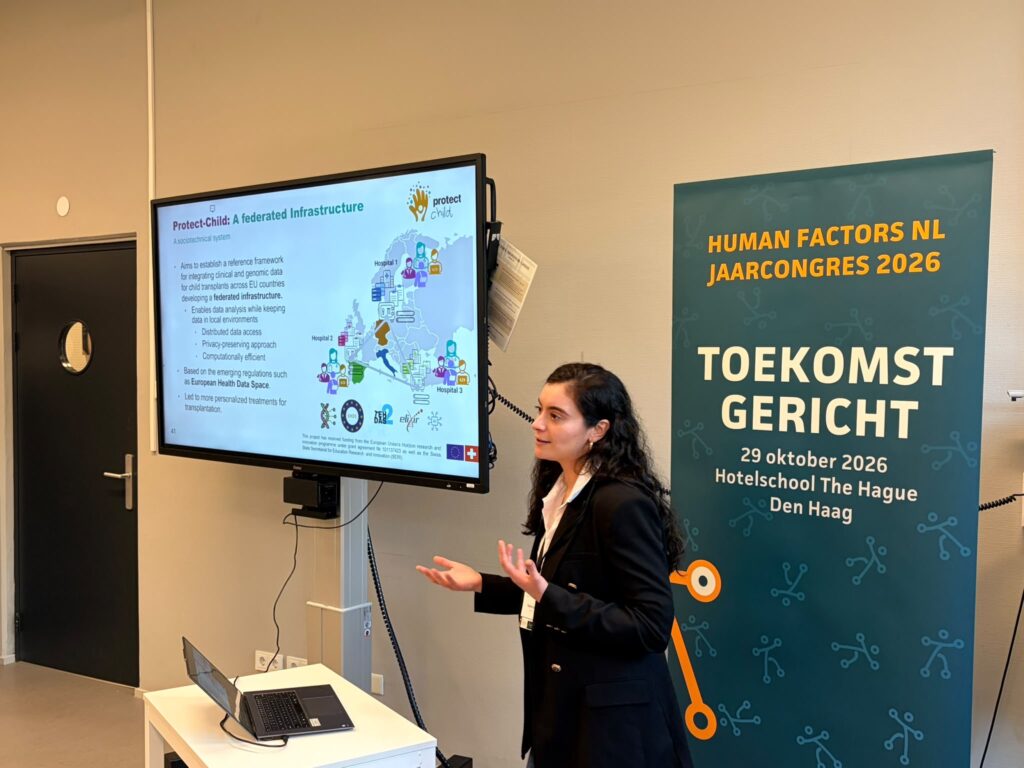
The project aims to develop a federated infrastructure in which data remains within each hospital, while analyses are performed locally, where the data is stored. This approach is both privacy-preserving and computationally efficient. It also ensures that data ownership remains with the hospitals, which retain responsibility for their own data. In many ways, this represents a practical implementation of the European Health Data Space (EHDS). Ultimately, the clinical ambition is to use these data to support the development of more personalised treatments for children who have undergone transplantation.
Our role
- Elicitation: a review of 53 articles gave 69 literature-based requirements.
- Prioritisation: 52 experts rated the requirements on a 1 to 7 scale.
- Negotiation: six focus groups with 36 experts tested the requirements against how hospitals actually work.
- Patient perspective: five patient representatives told us how they feel about managing their own data.
- Specification: we turned the requirements into a prototype with wireframes.
- Validation and iteration: a workshop with 27 experts rated the prototype yes or no, then explained why, followed by further revisions with clinicians.
The whole process took around 24 months.
What we learned
Different methods, different priorities. In a retrospective analysis of all the requirements, we standardised the requirements by theme within each method and compared each theme with the most prominent one in that method. We see that the data analysis requirements stood out across all of methods. Thus, requirements that are a most in the project, will keep apparing regardless of the method used to elicit requirements. However, we noticed that deliberation methods, such as the focus groups help to add nuance. For instance, the focus groups helped us understand that clinicians wanted to use the results not only to inform clinical decisions but also in ways that could benefit patients and their families directly. They also highlighted practical considerations, such as how data access works in clinical settings and how data standardisation can influence existing clinical workflows and the way clinicians interact with patients.
Deliberation shows competing priorities, but your users are not the whole system. Clinicians were key advocates and provided valuable insights into clinical needs and workflows. However, they could not speak to every technical, organisational, or governance aspect of the infrastructure. Moving from requirements elicitation to prioritisation therefore requires broader, cross-disciplinary engagement to identify and negotiate competing priorities and trade-offs within institutions.
The challenges are real. Coordinating stakeholders across countries and agendas was hard, as well as keeping a shared vocabulary between clinical, technical and legal perspectives. These challenges are quite relevant in healthcare, where early errors in requiremenets can have serious consequences.
The benefit is awareness. The more actively stakeholders are involved, the better they understand the project, its objectives, and its potential value. This engagement can help build ownership, strengthen advocacy, and ultimately reduce resistance to change when the technology is introduced.
Uncertainty remains. Regulatory frameworks are still evolving, and questions about the infrastructure’s sustainability and what happens beyond the project’s lifetime remain open. In socio-technical projects, we need to recognise that not all uncertainties can be resolved upfront. Part of the work is to continuously identify these gaps, address what we can, and adapt as the technological, organisational, and regulatory landscape evolves.
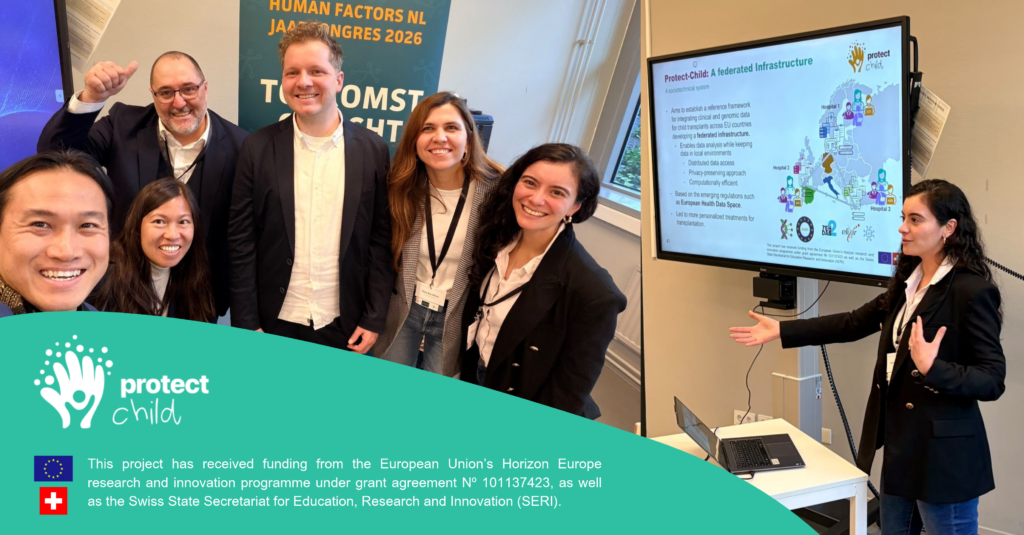
These are some of the reflections and findings I presented at Human Factors NL, building on work carried out together with Funda Yildirim, Eugenio Gaeta, Maria Fernanda Cabrera, and Simone Borsci.
I would like to close with the same question I posed during the presentation: What benefits have you experienced from involving users and other stakeholders in your work?
Authors: Valeria Resendez (University of Twente), Funda Yildirim (University of Twente), Eugenio Gaeta (Universidad Politécnica de Madrid), María Fernanda Cabrera (Universidad Politécnica de Madrid), Simone Borsci (University of Twente)